Option A
Courtyard performance night
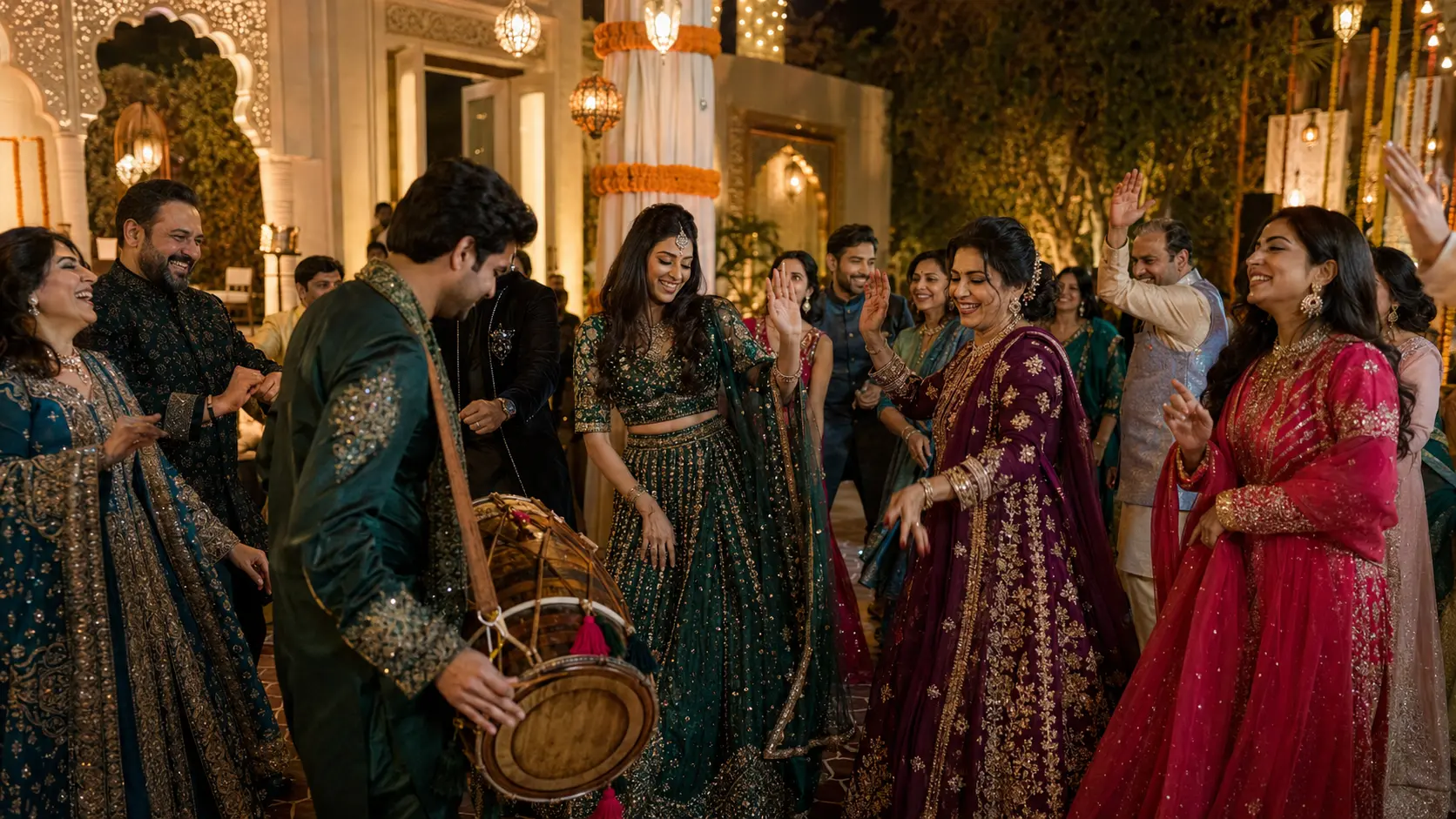
Use a central performance area with family seated close on three sides when the evening should feel participatory rather than theatrical.
Sangeet · 6 decisions · 18 ideas
Compare event formats, stages, performance plans, fashion and complete hospitality concepts for a music-led evening that brings both families together.
A considered starting point
A Sangeet is a pre-wedding celebration centered on music, dance and family performances. Most strongly associated with North Indian traditions, it is now included in many multi-event South Asian weddings and may be hosted by either family or jointly. Some couples plan a fully staged performance night; others prefer a shorter program that opens into dinner and dancing. Families may blend Punjabi, Gujarati, Pakistani, fusion or secular traditions, so the format should reflect the people involved rather than a fixed script. This guide helps you compare venue atmosphere, performance settings, dance floors, participation, Sangeet-appropriate fashion, seating, lighting and complete food and late-night hospitality ideas.
You can change an idea’s event after saving it.
Planning decision
Compare room shapes and stage scales that support family performance rather than spectacle for its own sake.
Option A
Use a central performance area with family seated close on three sides when the evening should feel participatory rather than theatrical.
Option B
Frame the performance area with dinner seating and warm practical light so the program can flow naturally into the meal.
Option C
Keep the stage low with clear side entrances when several family groups will perform; it preserves sightlines without sacrificing a focal point.
Planning decision
The floor, seating and lighting must work together for both performers and guests.
Option A
Place guests around a generous central floor when family participation matters more than a distant front-facing show.
Option B
Use a dark reflective floor with restrained warm light when jewel-tone clothing should carry the color instead of bright LED effects.
Option C
Mix dining chairs, low lounges and a shallow riser so elders and children can see performances without crowding the floor edge.
Planning decision
Plan a program people can actually rehearse and guests can enjoy.
Option A
Use a short two-dhol entrance to gather both families before the program rather than treating the instruments as background décor.
Option B
Build one shared number with simple formations and varied roles when both families want to participate without weeks of choreography.
Option C
Alternate family performances with a compact live ensemble so reset time feels intentional and the evening never goes silent.
Planning decision
Choose movement, color and weight for a night built around dancing.
Option A
Choose an emerald or teal lehenga with controlled volume and secure draping so the bride can turn and perform without managing loose fabric.
Option B
Use a lighter antique-gold sharara or lehenga when candlelight should catch the embroidery without adding heavy ceremonial volume.
Option C
Pair a lighter embellished silhouette with secure hair and jewelry when the bride plans to perform more than once.
Planning decision
Coordinate a palette without turning relatives into a uniform.
Option A
Use a precisely tailored midnight bandhgala with one subtle emerald connection to the room for a groom look built for movement.
Option B
Choose a deep aubergine achkan with minimal embroidery when the groom should complement the palette without looking dressed for the ceremony.
Option C
Give the wedding party an emerald, berry, midnight and antique-gold palette while allowing different silhouettes and levels of embellishment.
Carry the celebration forward
Open a focused Kismat edit for this celebration, compare choreography references, and add the strongest ideas to your real wedding lineup.
Continue exploring