Option A
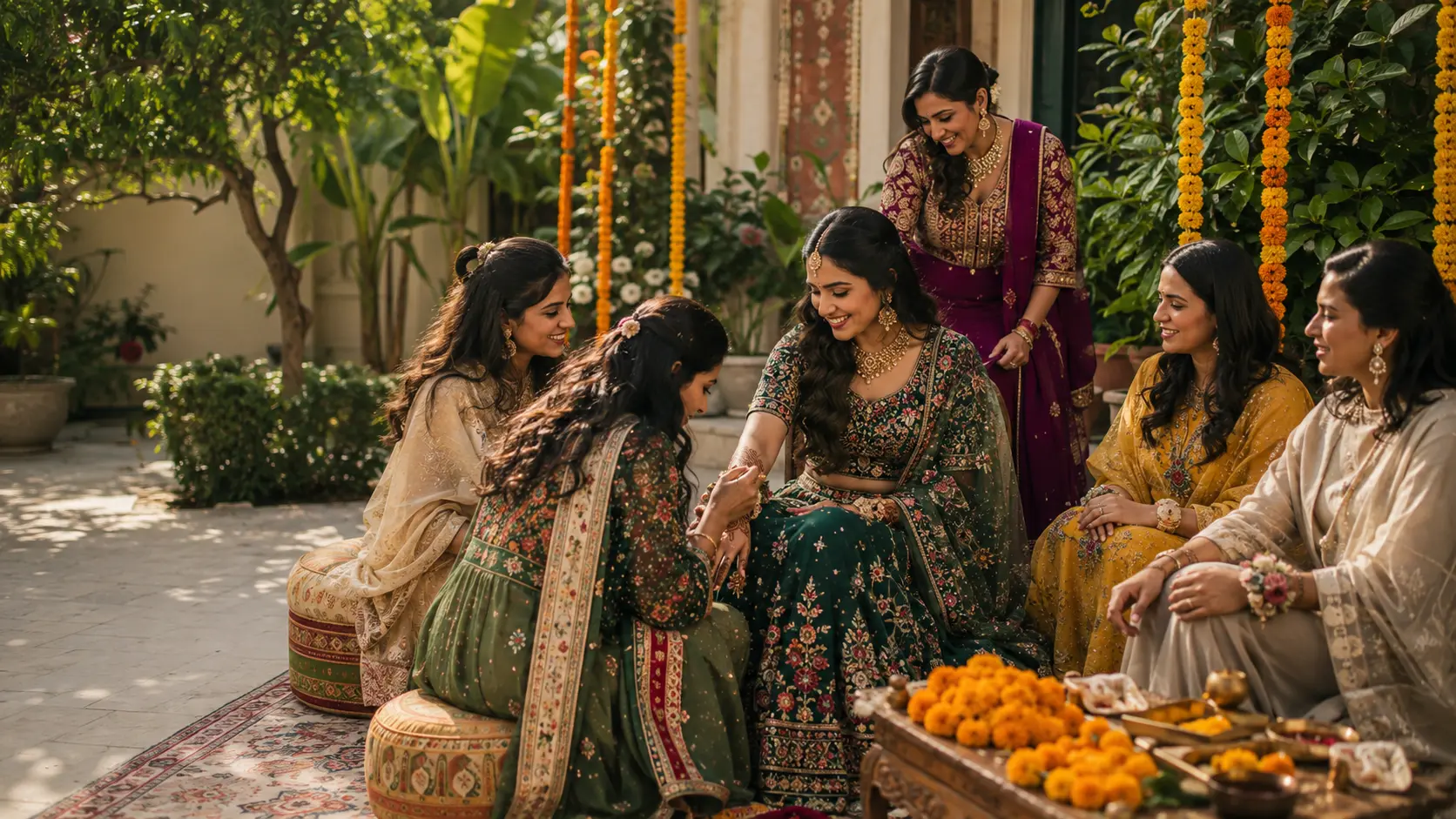
Estate lawn with distinct zones
Divide a broad lawn into dining, henna and performance areas while keeping one clear central route for elders and service.
Mehndi · 8 decisions · 24 ideas
Compare distinct ways to shape an outdoor Mehndi—from the setting and focal stage to fashion, food and the evening transition.
A considered starting point
A Mehndi is a pre-wedding gathering centered on henna, music, food and time with family. Garden versions are especially loved for their relaxed daytime atmosphere and the way flowers, textiles and color can sit naturally within the landscape. Depending on family, region and faith, it may be hosted by the bride’s family, shared by both families or combined with a dholki or welcome event. There is no single correct format. This guide helps you compare the choices that most affect the celebration: how guests gather, where the couple sits, what everyone wears, how hospitality flows and how the garden changes after sunset.
You can change an idea’s event after saving it.
Planning decision
Compare layouts that change how the gathering feels and how easily guests move.
Option A
Divide a broad lawn into dining, henna and performance areas while keeping one clear central route for elders and service.
Option B
Concentrate a shaded henna lounge, supported elder seating and one clear service path in a smaller garden rather than imitating an estate layout.
Option C
Use an intimate courtyard for a family-led Mehndi where henna, sweets and conversation can remain within one connected setting.
Planning decision
Choose one focal language rather than combining every Mehndi motif.
Option A
Keep the couple’s seating low and open so a floral focal point feels inviting rather than separating them from the room.
Option B
Layer block prints and bunting around supported seating for color that feels crafted, informal and easy to gather around.
Option C
Use a secure low swing with an accessible side approach as a relaxed focal point for henna, greetings and family photographs.
Planning decision
Compare color, silhouette and weight for a bride who will greet, sit for henna and dance outdoors.
Option A
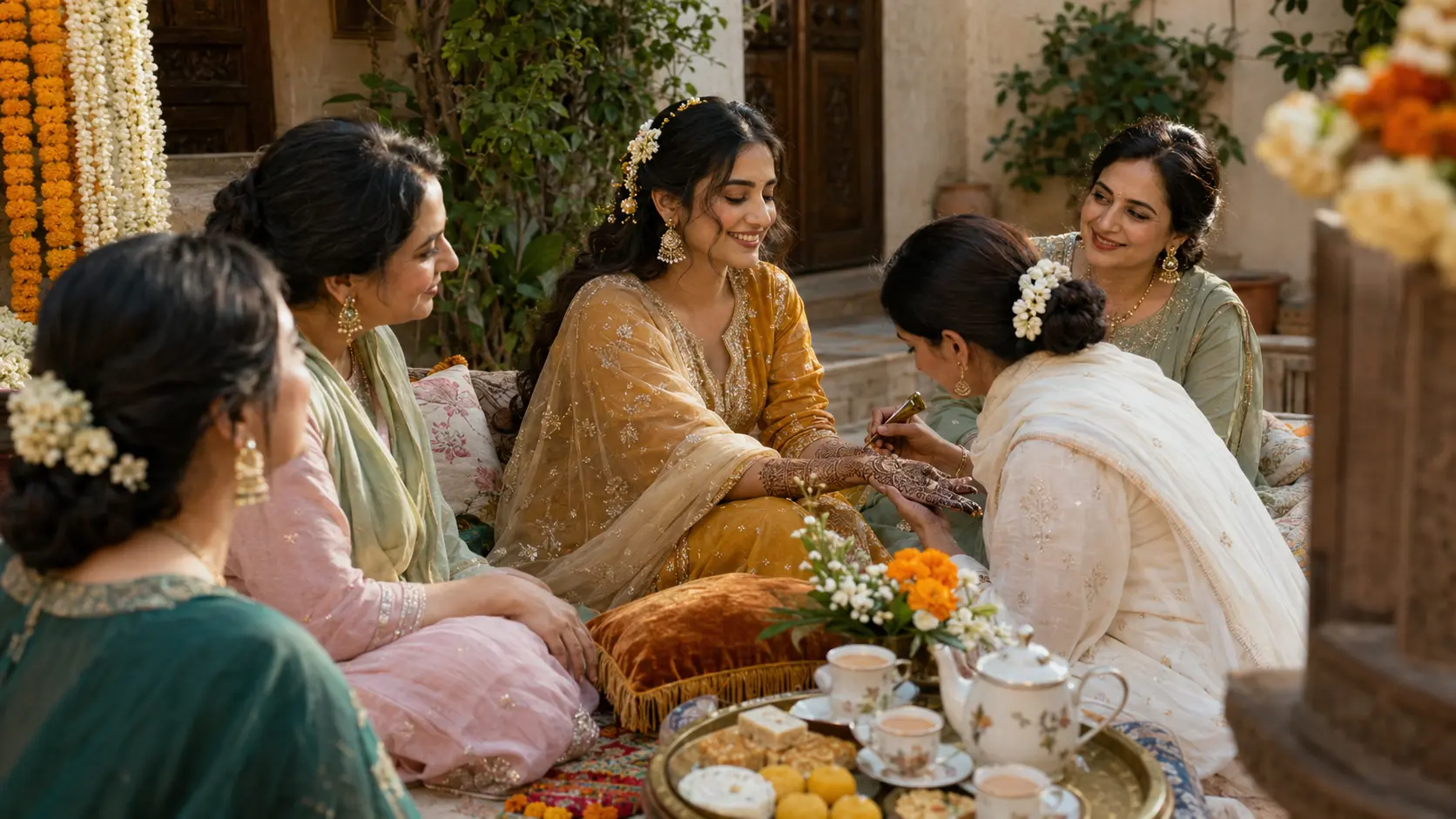
Use one luminous yellow tone with visible henna for a daytime look that feels joyful without competing with the garden.
Option B
Choose a cool jewel tone when you want intricate hand henna and warm jewelry to stand out without adding another yellow or orange layer.
Option C
Choose a lighter antique-gold silhouette when the garden and flowers already carry saturated color and the bride wants an evening-ready finish.
Planning decision
Coordinate the wider family without turning everyone into one matching block.
Option A
Use a lightweight sage waistcoat over ivory tailoring when the groom needs a distinct garden look that remains easy to move in.
Option B
Give relatives a controlled range of berry, marigold, emerald and ivory so family photographs feel connected without prescribing one outfit.
Option C
Pair a fuchsia-and-orange bridal silhouette with ivory and sage groom tailoring so both partners feel Mehndi-ready without competing with the garden.
Planning decision
Compare the details that frame the bride’s hands and face without making the schedule impractical.
Option A
Reserve an earlier protected appointment for full arm coverage so the design can dry before greetings and photographs begin.
Option B
Choose a balanced hand design and restrained rings when the henna itself should remain legible in jewelry and greeting photographs.
Option C
Add jasmine or marigold jewelry only after the henna is dry so fresh flowers frame the hands without catching or smudging the design.
Planning decision
Compare refreshment moments that feel celebratory and remain practical outdoors.
Option A
Present laddoo, barfi, jalebi and small modern desserts together under shade so the display feels celebratory and remains practical outdoors.
Option B
Let relatives offer laddoo, barfi and jalebi beside a coordinated dessert display so the welcome feels personal while guests can see the full range.
Option C
Serve rose lemonade, nimbu pani, mango lassi and herb water from one shaded station so every age group receives a considered welcome.
Planning decision
Compare entertainment formats that invite family participation and suit an outdoor sound plan.
Option A
Use a short live dhol entrance to draw guests toward the next moment without turning the full afternoon into amplified performance.
Option B
Place dholak, tabla and harmonium beside supported family seating when singing together matters more than a front-facing stage show.
Option C
Combine lantern-lit paths, protected candles, string lights and one illuminated floral focal point so every zone remains safe, warm and connected after sunset.
Carry the celebration forward
Open a focused Kismat edit for this celebration, compare choreography references, and add the strongest ideas to your real wedding lineup.
Continue exploring