Option A
Formal estate lawn Nikah
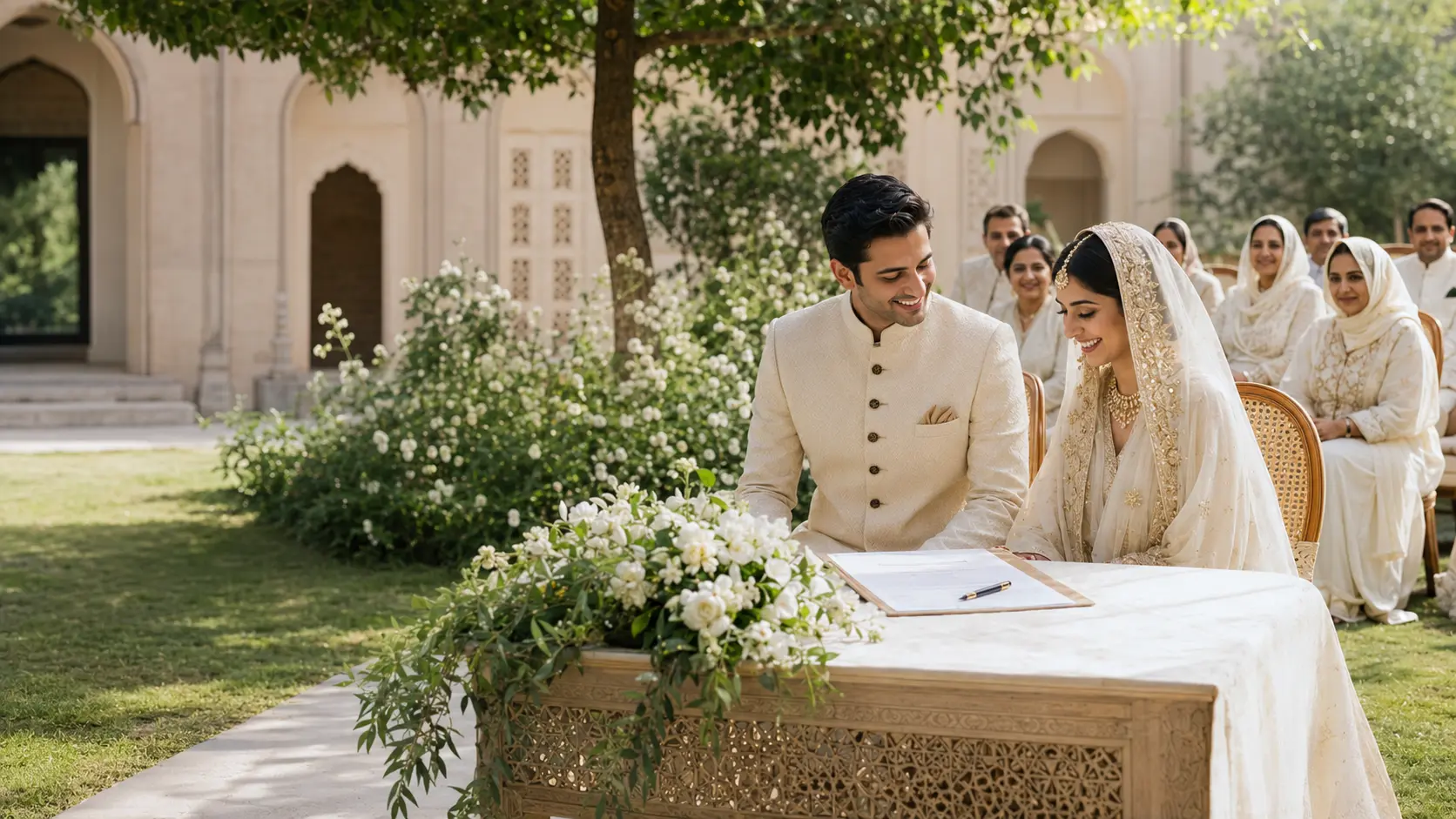
Use a clear garden axis, low florals and shaded seating when a larger guest list still needs an unobstructed view of the signing and witnesses.
Nikah · 5 decisions · 15 ideas
Compare outdoor ceremony formats that protect the meaning of the Nikah while making witnesses, guests and hospitality feel considered.
A considered starting point
A Nikah is the Islamic marriage contract and may be the central wedding ceremony or one part of a larger wedding weekend. An outdoor Nikah can feel calm, intimate and closely connected to family, but the religious and legal requirements should lead the design—not the other way around. Hosting varies widely: either family may host, families may share responsibility, and customs differ across Pakistani, Indian, Bangladeshi and other Muslim communities. Couples should confirm the officiant, witnesses, documentation and any prayer or privacy needs before choosing a layout. This guide compares ceremony settings, signing arrangements, attire, guest comfort and the transition into refreshments or a meal.
You can change an idea’s event after saving it.
Planning decision
Compare intimacy, formality and the infrastructure each setting requires.
Option A
Use a clear garden axis, low florals and shaded seating when a larger guest list still needs an unobstructed view of the signing and witnesses.
Option B
Arrange close family in a shallow semicircle with supported elder seats so the signing feels intimate without compromising sightlines or access.
Option C
A shaded courtyard keeps witnesses and close family near the signing table while reducing long outdoor walking routes.
Planning decision
The focal point should support the actual people and documents involved.
Option A
Keep the marriage documents, pens, officiant and witnesses together at one uncluttered table so the actual contract remains the visual and practical focus.
Option B
Frame the signing with jasmine, white roses and greenery while leaving both sides open for witnesses and family to approach naturally.
Option C
Seat the officiant and witnesses at a dedicated contract table with documents and pens prepared before guests arrive, keeping circulation clear for signatures and family photographs.
Planning decision
Choose silhouettes and layers for modesty, movement and the actual temperature.
Option A
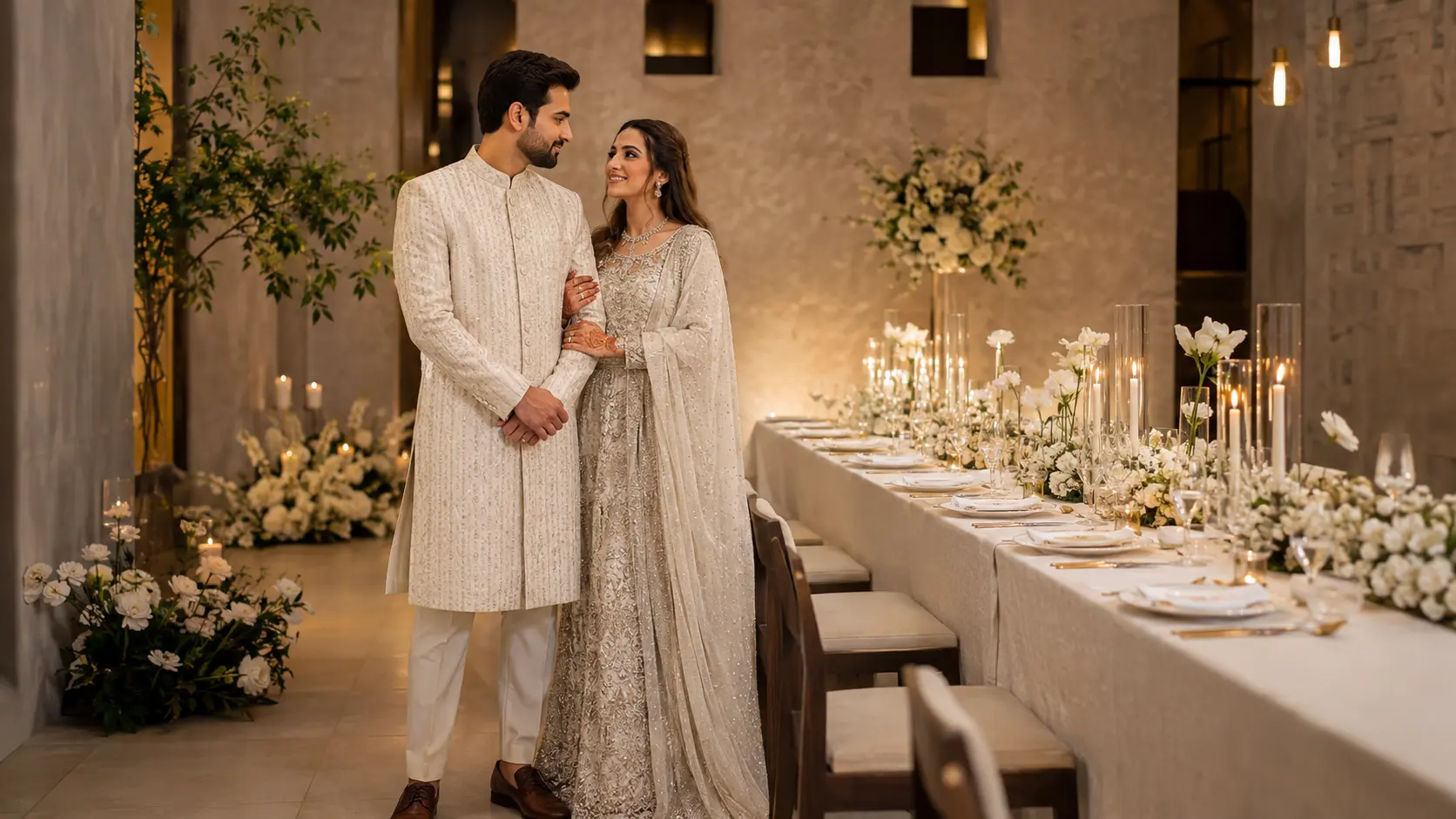
Pair a modest dusty-rose bridal silhouette with a breathable sage achkan when the couple wants soft garden color that still reads as ceremonial.
Option B
Choose a secure dupatta, covered silhouette and lighter embroidery when the bride wants ceremony presence without heavy outdoor layers.
Option C
Choose breathable structured tailoring for an outdoor ceremony, then test the fabric in the actual daylight before finalizing color.
Planning decision
Compare practical choices that shape how guests arrive, see and participate in the ceremony.
Option A
Keep flowers below knee height and preserve a firm, level route so the processional view remains open and mobility devices can pass safely.
Option B
Place supported chairs, water and shade close to the signing when elders or guests with limited mobility should not cross the full lawn.
Option C
Keep aisle flowers below knee height, shade the guest rows and preserve a firm central route so every seat can see the signing without narrowing access.
Planning decision
A short ceremony still needs shade, water, accessibility and a graceful next step.
Option A
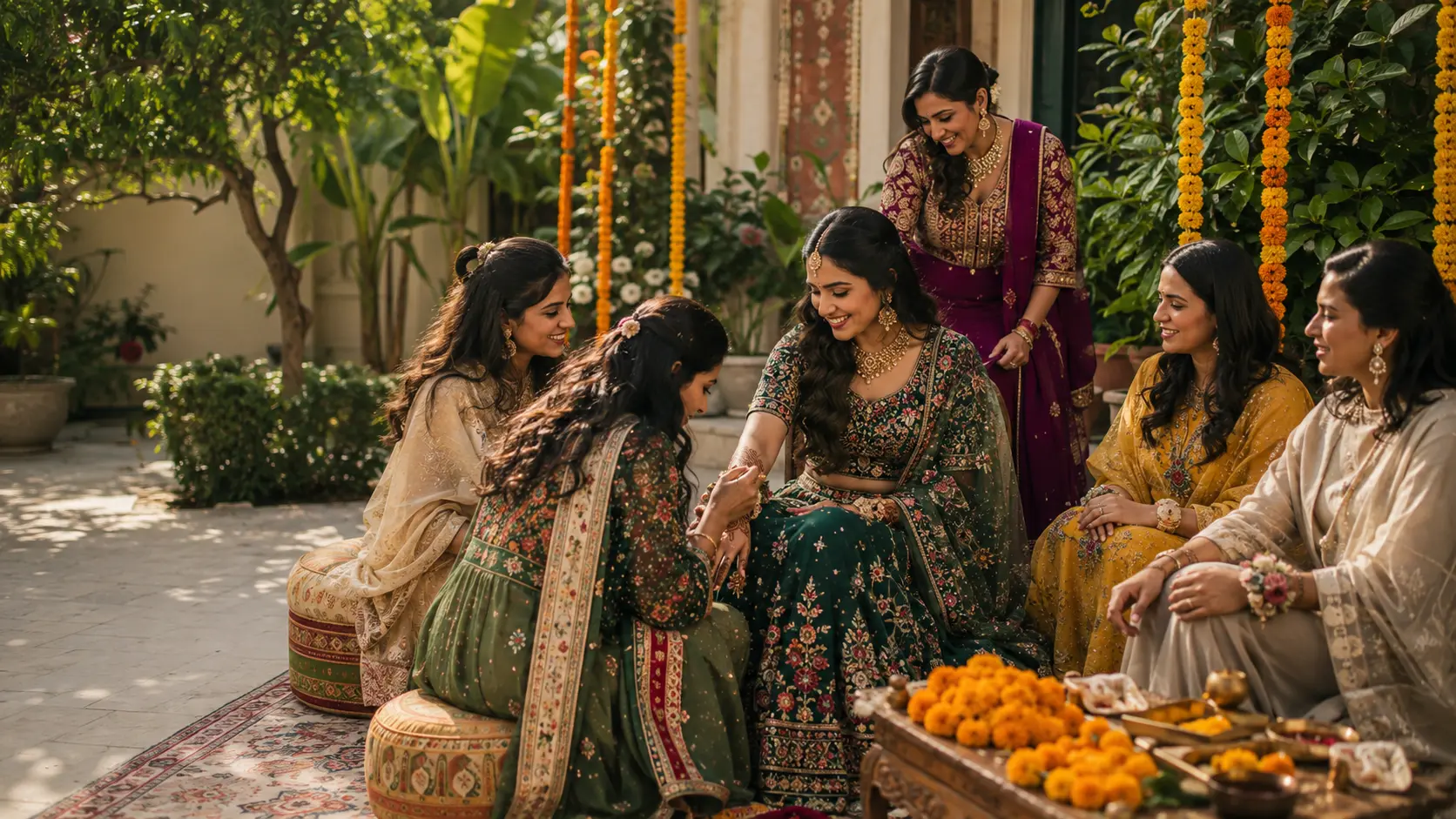
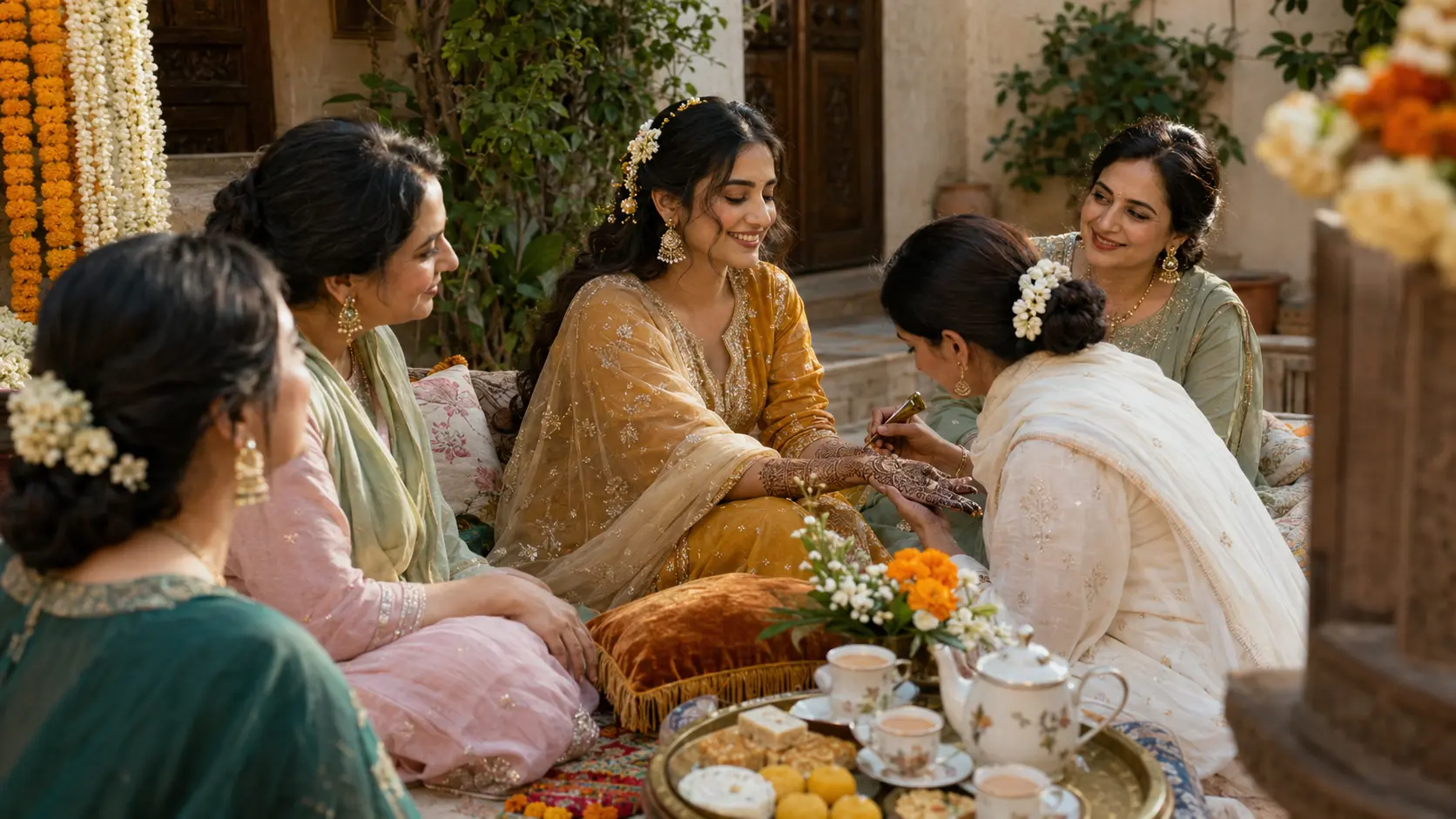
Move directly from the signing into shaded tea, familiar sweets and light savory bites so families can greet the couple without an awkward room reset.
Option B
Serve rose sharbat, lemon-mint water and tea from a shaded station with a clear queue so refreshment never interrupts the ceremony route.
Option C
Keep tea, mithai and family greetings beside the ceremony garden as lanterns come on, avoiding an abrupt move to an unrelated reception setting.
Continue exploring