Option A
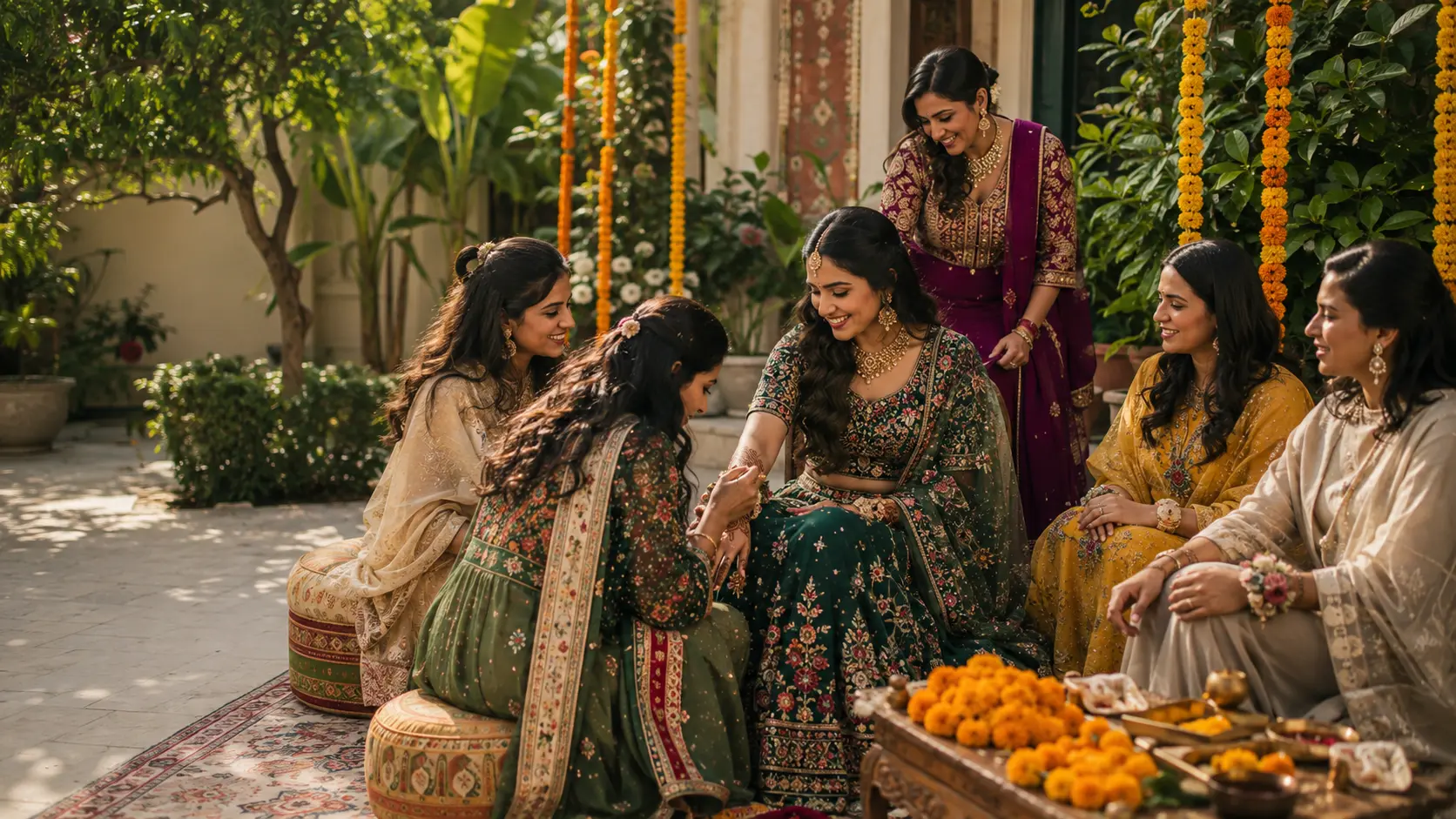
Family henna circle
Arrange supported seating around the bride so henna and conversation remain part of the same intimate gathering.
Mehndi · 5 decisions · 15 ideas
Compare ways to make a home Mehndi feel joyful and generous while protecting circulation, comfort, henna time and family participation.
A considered starting point
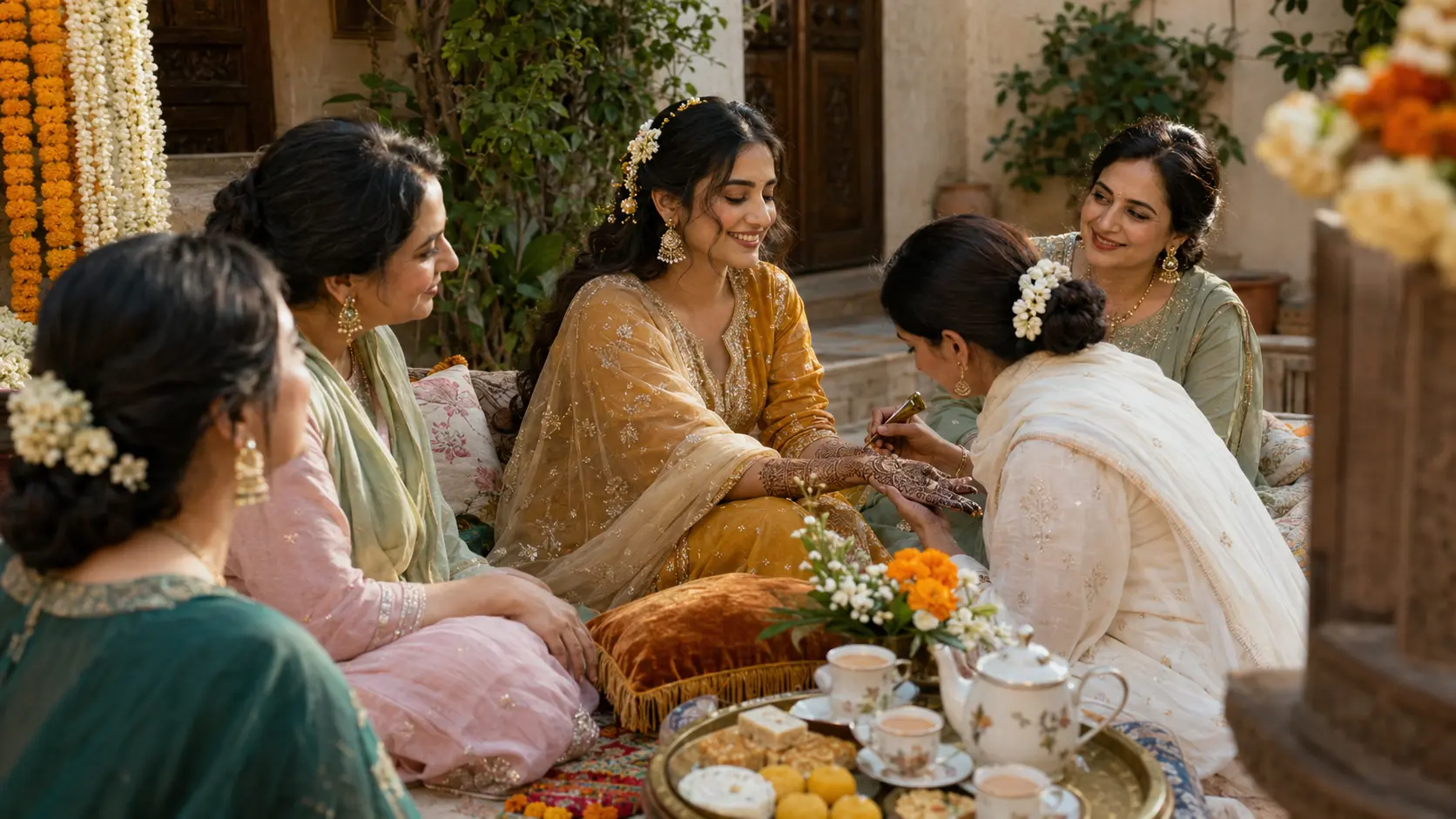
An at-home Mehndi can be the most personal event in a wedding week: close family, henna, familiar songs and food served in a space with real memories. In many Pakistani and North Indian families it may be hosted by the bride’s family, shared by both families or combined with a dholki; other families create their own version. The scale and customs vary widely, and intimacy should not mean guests are uncomfortable or the home becomes impossible to move through. This guide compares room layouts, compact décor, bridal and henna styling, home-friendly hospitality and music formats so the gathering feels festive while remaining recognizably yours.
You can change an idea’s event after saving it.
Planning decision
Use the home’s scale honestly and create one strong celebration zone.
Option A
Arrange supported seating around the bride so henna and conversation remain part of the same intimate gathering.
Option B
Use the existing room with one henna station, supported family seating and a clear doorway so the home still works while it feels transformed.
Option C
Choose a secure small swing with an accessible approach when a residential patio needs one memorable focal point rather than a venue-sized stage.
Planning decision
Compare levels of coverage that fit a residential schedule and give the artist a workable setup.
Option A
Give the artist stable window light, hand supports and an uninterrupted early time slot so detailed work can dry before the room fills.
Option B
Choose a dense hand design when henna should be one of the look’s main visual elements and allow a real drying window.
Option C
Choose a lighter palm-and-finger design when the bride wants visible henna but the home event has a shorter preparation window.
Planning decision
Use color and personal detail to distinguish the bride without making an intimate home gathering feel overproduced.
Option A
Add jasmine and marigold bracelets only after the henna is dry so fresh detail frames the hands without smudging the design.
Option B
Give close relatives a loose palette of pistachio, rose, mustard and ivory, varying silhouettes and embroidery so the room feels connected without becoming a uniform.
Option C
Choose a bright gharara with restrained mirrorwork and secure floral jewelry when the bride wants to sit for dholki, greet relatives and dance comfortably at home.
Planning decision
Build a complete home hospitality rhythm rather than displaying isolated food photographs.
Option A
Serve biryani with raita, salad, breads and one vegetarian main when the home cannot safely support a sprawling multi-station buffet.
Option B
Welcome guests with covered trays of laddoo, barfi and jalebi so hospitality begins immediately without consuming scarce floor space.
Option C
Place a supervised chai point at the kitchen threshold so the evening can close warmly without hot service crossing crowded floor seating.
Planning decision
Keep production light enough that relatives can still lead the room.
Option A
Seat relatives around one dholki and harmonium when singing together—not watching a formal show—is the heart of the evening.
Option B
Use one dhol player for the bride’s arrival or a short dance set, then return the home to a volume that supports conversation.
Option C
Transform the ceiling with lightweight tassels and flower strands when floor space must remain clear for seating, henna and circulation.
Carry the celebration forward
Open a focused Kismat edit for this celebration, compare choreography references, and add the strongest ideas to your real wedding lineup.
Continue exploring